In April 2026, Gwadar Port handled more container traffic in a single month than it had handled in all of 2025. The reason was the disruption of the Strait of Hormuz, the channel that normally carries roughly a fifth of the world’s oil and gas. As shipping routes shifted, Pakistan’s southwestern coast suddenly became strategically relevant.
That disruption is now reshaping the region’s construction market.
A US-Israeli war with Iran, beginning on 28 February 2026 and followed by a June ceasefire, damaged energy and civilian infrastructure across the UAE, Bahrain, Kuwait and Qatar. Energy infrastructure damage alone is estimated at $25–39 billion, with broader damage reaching $200 billion.
For construction suppliers, the implication is immediate: someone has to rebuild.
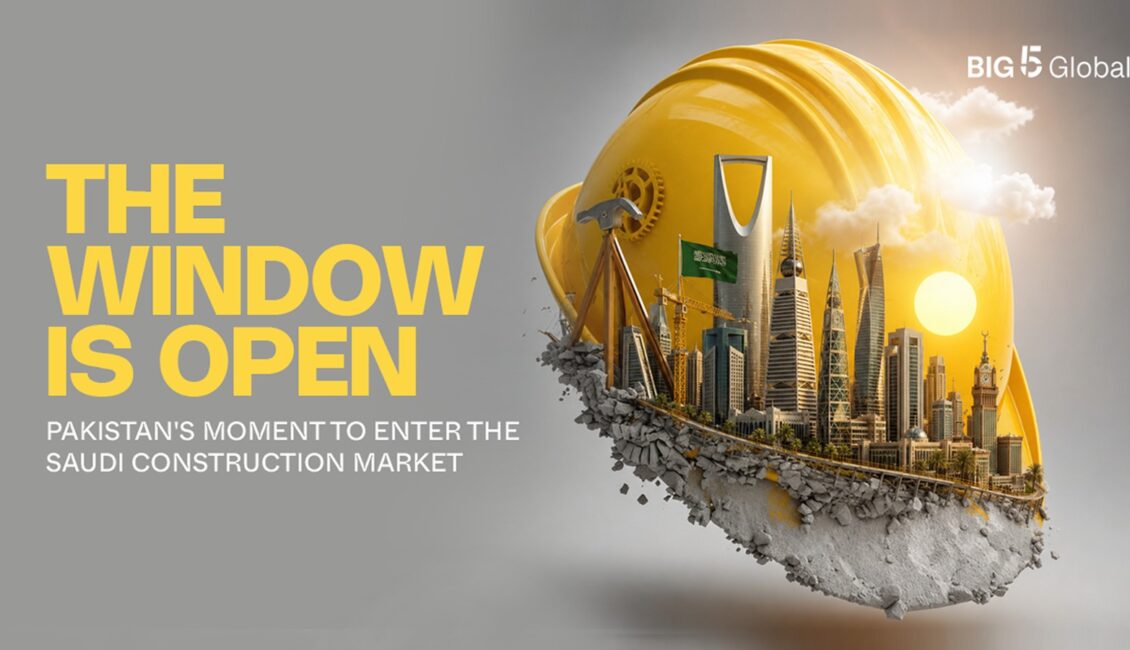
But this is not simply a Gulf reconstruction story. Saudi Arabia’s $1.65 trillion construction pipeline continues through projects including NEOM, the Red Sea Project, Qiddiya and Diriyah Gate. And across the wider MEASA region, construction demand is estimated at $9.18 trillion.
The Gulf is the immediate catalyst. MEASA is the market.
The Platform to Reach MEASA
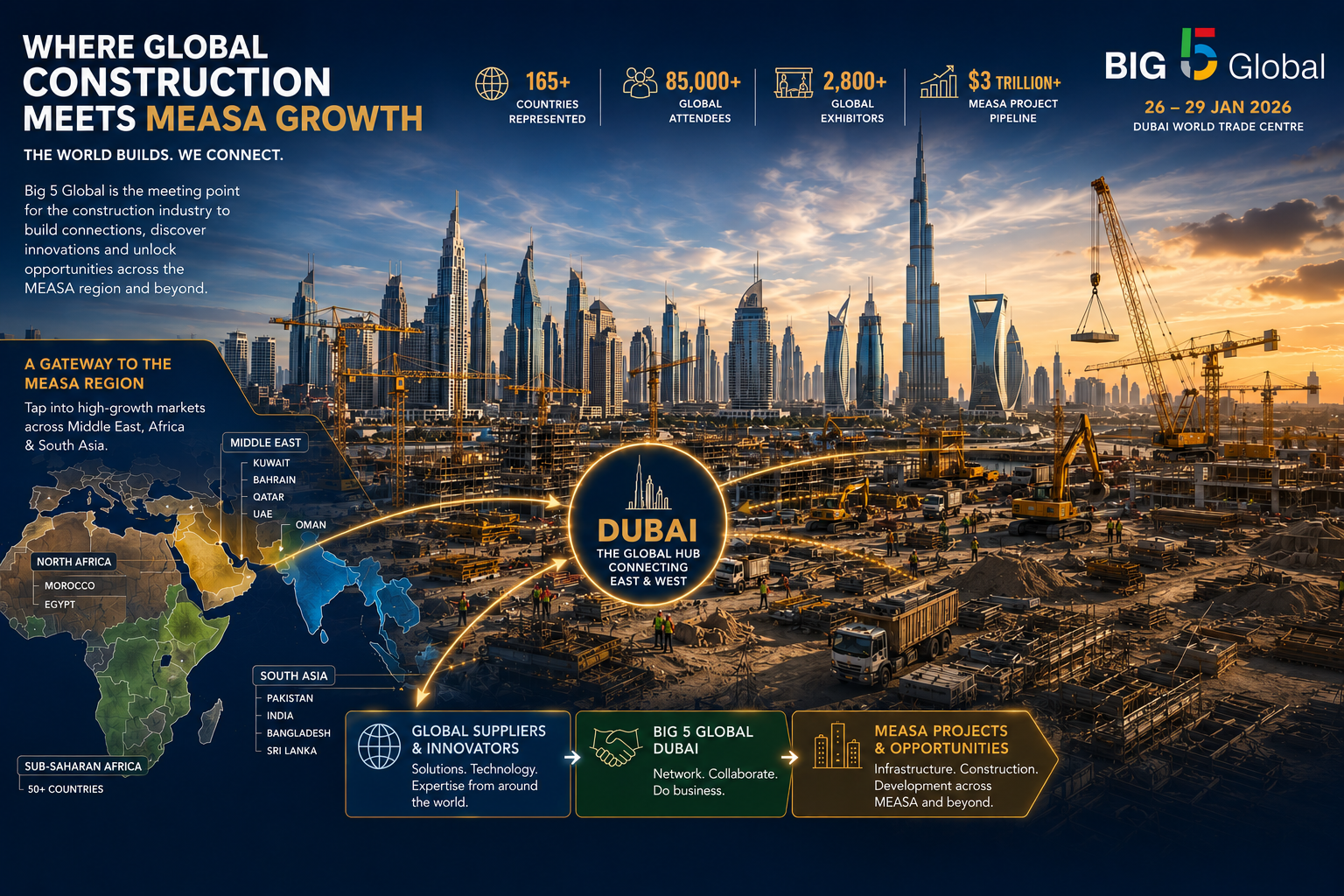
That is where Big 5 Global, 23–26 November 2026 in Dubai, becomes strategically important.
Dubai provides the meeting point, but the opportunity extends far beyond the UAE. Big 5 Global connects suppliers with the buyers, contractors, developers, distributors and decision-makers shaping construction across MEASA.
The 2025 edition attracted 85,093 attendees from 169 countries, with 70% from within the GCC. 43% held Chairman, Board, Partner, Owner or C-level positions, while another 34% were senior managers. Buyers spent $3.34 billion at the show.
The event also featured a pre-opening matchmaking breakfast for suppliers and distributors, four co-located summits attracting 1,815 senior decision-makers, and 24 government-backed country pavilions.
For Pakistani exporters, that is the missing link between having a competitive product and accessing the people who can buy it across the region.
Why Pakistan Should Move Now
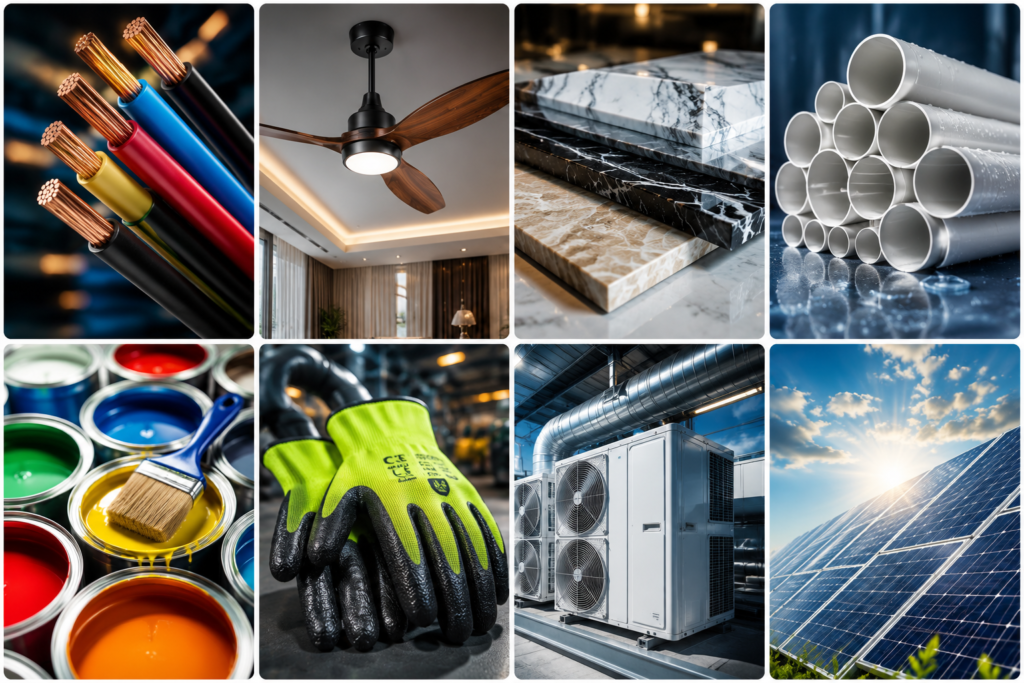
Pakistan already produces products the region needs: cables, PVC and UPVC products, aluminium goods, laminated boards, marble and onyx, PPE.
Its problem is commercial presence. It needs to build the relationships to reach them.
The timing strengthens the case.
Forecasters expect Gulf economies to begin recovering from the second half of 2026 as shipping through Hormuz normalizes. As reconstruction moves into routine procurement, established suppliers will regain their advantage.
Pakistan also enters this window with stronger strategic goodwill. Saudi Arabia transferred $2 billion to Pakistan in April 2026, with a further $3 billion pledged, while Islamabad and Abu Dhabi are finalizing a Comprehensive Economic Partnership Agreement that could double bilateral trade from its current $8–10 billion base.
None of this guarantees an order. It creates an opening.
Companies that enter while the market is being reshaped can help write the new supplier list. Those that wait will compete for a place on it.
The opportunity is no longer just the Gulf.
It is the $9.18 trillion MEASA construction market.
And Big 5 Global is where Pakistan can enter the room.
Big 5 Global is taking place from 23–26 November 2026 at Dubai World Trade Centre, UAE, bringing together the global construction industry under one roof. Pakistani construction material and industry exporters can leverage this opportunity to access international buyers and expand into high-value markets by participating in the Pakistan Pavilion at subsidized rates, in collaboration with TDAP. For more information and participation details, contact us today.